
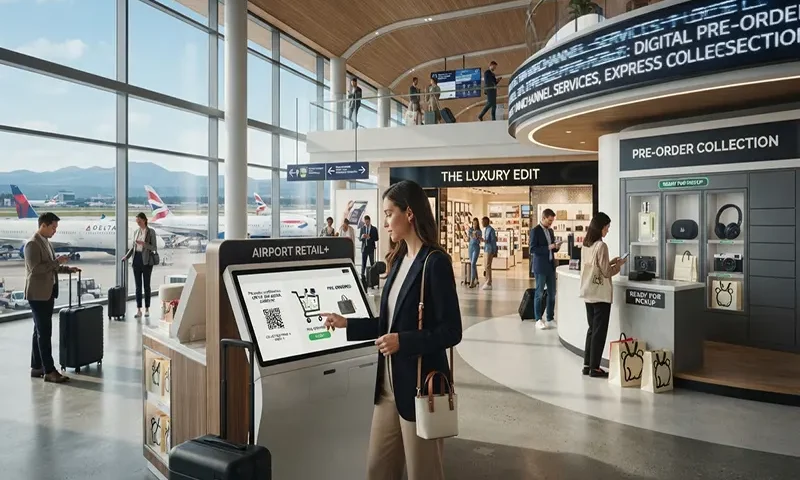
Picture the traditional airport shopping experience: you finally clear security, check your watch in a panic, and rush through a maze of crowded duty-free floors. You waste precious minutes standing in long checkout queues, praying you won’t miss your final boarding call. For decades, airports relied on a “captive audience” model—trapping passengers in retail corridors with little alternative than to browse under time-constrained stress.
That era is rapidly coming to an end. Today, the convergence of mobile technology, data analytics, and changing consumer habits is revolutionizing terminal commerce. Welcome to the future of omnichannel travel retail and digital pre-ordering, where airports are transforming from stressful transit bottlenecks into frictionless, digital-first shopping ecosystems.
The Evolution of Airport Retail: From Captive Audience to Convenience Economy
Historically, airport retail was insulated from high street competition because travelers had few options to pass the time. Retailers didn’t need to work hard to earn attention; foot traffic did the heavy lifting.
However, today’s “connected traveler” expects a vastly different standard. Modern passengers—accustomed to same-day delivery, seamless app-based transactions, and hyper-personalized recommendations at home—have zero tolerance for friction. They demand speed, convenience, and continuity between their pre-trip digital exploration and their physical arrival at the terminal. Retailers and airport operators are realizing that to capture discretionary spending, they must meet passengers on their devices long before they ever step foot near a boarding gate.
How Digital Pre-Ordering is Redefining Terminal Commerce
At the heart of this retail transformation is digital pre-ordering. Dedicated airport apps and mobile-optimized web portals now allow passengers to browse luxury goods, local delicacies, cosmetics, and duty-free exclusives days or even weeks before their flight.
This model introduces several major advantages to the passenger experience:
- Time Optimization: Instead of browsing under duress, travelers can make thoughtful purchases from their living room couch or during their taxi ride to the airport, completely eliminating decision fatigue.
- Guaranteed Inventory: Pre-ordering ensures that high-demand items, specific sizes, or limited-edition duty-free bottles are locked in and waiting, removing the disappointment of finding an item sold out on-site.
- Seamless Pickup Models: Airports are rolling out flexible fulfillment options, including dedicated fast-lane collection counters, smart pickup lockers near specific boarding gates, or even direct delivery to passenger seats.
The Omnichannel Ecosystem: Bridging Online and Offline Worlds
True omnichannel travel retail goes far beyond simply putting a catalog online. It creates a unified ecosystem where physical stores and digital touchpoints work in harmony.
Forward-thinking airports and brands are leveraging advanced technologies to elevate the journey:
- Augmented Reality (AR) and Virtual Try-Ons: Passengers can use their smartphones to virtually try on luxury sunglasses, cosmetics, or high-end watches while waiting at their gate before finalizing a purchase.
- Geo-Fencing and Data Integration: By synchronizing with flight data and mobile geo-fencing, retail apps can send personalized, time-sensitive offers when a passenger steps into a specific terminal or checks in for a connecting flight.
- Frictionless Biometric Checkouts: Long checkout queues are vanishing thanks to unified digital wallets, one-click mobile payments, and cashierless “grab-and-go” automated stores powered by computer vision.
Challenges and the Road Ahead
Despite its massive potential, scaling omnichannel retail in airports involves complex operational hurdles. Coordinating real-time logistics between online portals, secure airside warehouses, and strict aviation security compliance requires heavy infrastructure upgrades. Retailers and airport authorities must invest in legacy system modernization and robust data-sharing frameworks to make gate-side or in-flight delivery standard practice.
As we look toward the horizon, artificial intelligence will drive hyper-personalization to unprecedented levels—predicting a traveler’s shopping preferences based on past trips, weather at their destination, and flight duration before they even open their app.
Strategic Takeaway
The future of airport retail no longer belongs to the loudest storefronts or the captive foot traffic of yesterday. Instead, it belongs to airports and brands that treat the terminal as a connected, omnichannel ecosystem. By embracing digital pre-ordering and frictionless shopping journeys, the modern airport is redefining transit spaces into places where travel retail is not a stressful afterthought, but a seamless highlight of the journey.

