
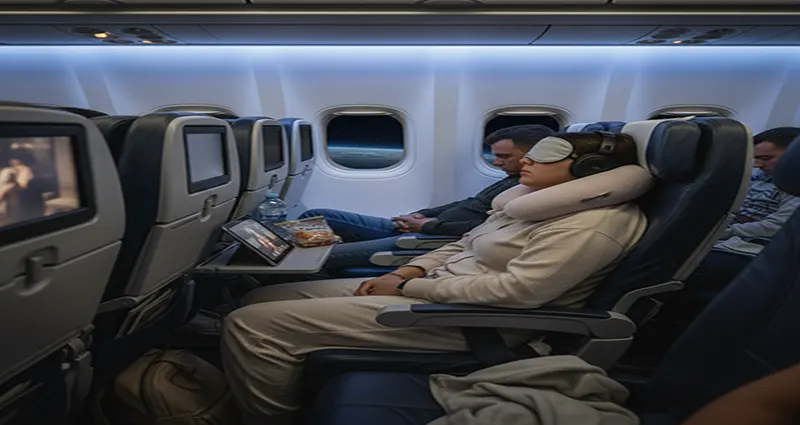
The thought of an exotic destination is thrilling, but the reality of a long-haul flight in economy class—cramped seats, dry air, and endless hours—can fill even the most seasoned traveler with dread. While you can’t magically upgrade your seat, you can upgrade your experience through smart preparation and proven techniques.
A long flight doesn’t have to ruin your first day abroad. This guide provides the essential, actionable survival plan to make your next long-haul flight manageable, comfortable, and conducive to a quick recovery.
Pre-Flight Prep and Seating Strategy
Your comfort starts long before you step onto the plane.
- Seating is Key: Choose wisely! Window seats are ideal for sleeping, as you can lean against the wall. Aisle seats are better for frequent movers and restroom access. Use sites like SeatGuru to check your aircraft’s specific layout and avoid “bad” seats near lavatories, which are noisy and high-traffic.
- Dress for DVT Prevention: Wear loose, comfortable layers, as cabin temperatures fluctuate wildly. Crucially, invest in a good pair of compression socks. These are essential for improving circulation and significantly reducing the risk of Deep Vein Thrombosis (DVT), a dangerous side effect of prolonged immobility.
- Assemble Your Survival Kit: Your carry-on is your sanctuary. Must-have items include:
- Noise-Canceling Headphones (to drown out engine drone and crying babies).
- A large, empty reusable water bottle (fill after security).
- A flat-back travel pillow, or a scarf/pashmina, which can be more versatile than a bulky, traditional U-shaped neck pillow.
In-Flight Comfort and Health
These simple in-flight habits are the keys to minimizing fatigue and discomfort.
- Hydration is Non-Negotiable: Skip the coffee, soda, and especially the alcohol. All three drastically increase dehydration, which is the primary cause of fatigue and jet lag. Drink water constantly—aim for at least 8 ounces every two hours.
- Movement is Medicine: Get up and walk the aisle every 1–2 hours. When seated, perform simple stretches: rotate your ankles, lift your knees, and stretch your shoulders to maintain blood flow.
- Embrace the Dark: Immediately set your watch to the destination time upon boarding. Use a high-quality sleep mask and your headphones/earplugs to create a dark, quiet, personal micro-environment. Ignore the cabin light schedule and try to sleep during the destination’s nighttime hours.
- Snack Smarter: Avoid the heaviest airplane meals, which are high in sodium and lead to bloat. Bring light, protein-rich snacks like nuts, dried fruit, or energy bars to control your blood sugar.
Arrival and Recovery
Minimize jet lag and maximize your first day abroad.
- Seek the Light: The moment you land, expose yourself to natural daylight. Light is the most powerful signal for resetting your body’s circadian rhythm. Even if you feel exhausted, step outside.
- Adjust to Local Time: If you land in the morning, do not nap for more than 20 minutes. Power through until a reasonable local bedtime (9 PM-10 PM) to force your body onto the new schedule.
- Walk It Out: Take a brisk, short walk upon arrival. This helps circulate blood, loosen muscles, and signal to your body that you are active and alert in the new time zone.

